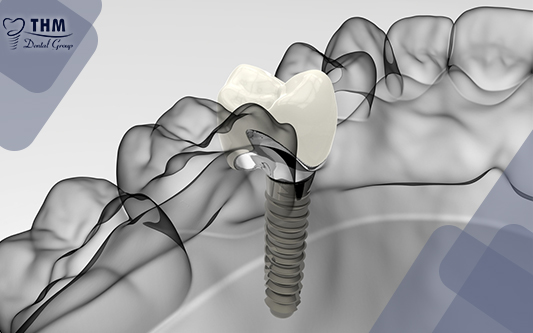
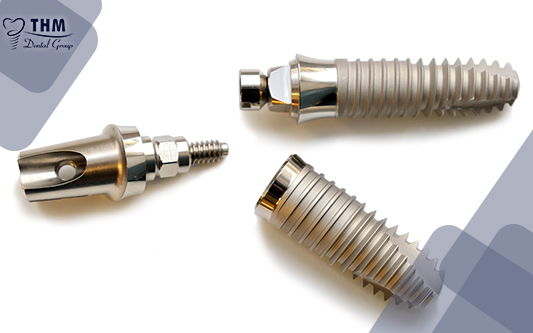
Hiện nay implant là một trong những phương pháp phục hình răng thẩm mỹ được khá nhiều người tin tưởng lựa chọn. Tuy nhiên, sau khi cấy implant xong lại có không ít khách hàng phát sinh nhu cầu niềng răng. Vậy câu hỏi đặt ra ở đây là : răng implant có niềng được không?
Nếu bạn cũng đang thắc mắc rằng liệu răng implant có niềng được không thì đừng bỏ qua bài viết sau đây nhé!
Răng implant có niềng được không?
Cấy răng implant có niềng được không? Câu trả lời là có thể hoặc không. Tại sao lại như vậy?
Thứ nhất, sau khi trồng implant xong thì răng gần như đã cố định chắc chắn một chỗ. Khả năng để dịch chuyển nó gần như là con số 0. Do đó, muốn biết răng implant có niềng được không phải xem xét qua nhiều khía cạnh như số lượng răng, vị trí răng, tình trạng xương hàm, vị trí niềng…. Nếu răng implant đã ở đúng vị trí của nó thì việc tác động để di dời các răng khác xung quanh nó là hoàn toàn có thể.
Bên cạnh đó, việc răng implant có niềng được không còn phụ thuộc vào người thực hiện. Nó đòi hỏi các bác sĩ phải có tay nghề và chuyên môn cao ở cả lĩnh vực niềng răng lẫn cấy ghép implant thì mới có khả năng điều chỉnh và dùng lực hợp lý để điều hướng di chuyển cho răng.
Tóm lại, không có một câu trả lời chắc chắn nào có thể thỏa mãn nghi vấn răng implant có niềng được không cả. Nhìn chung, sau khi cấy implant xong, khả năng cao là vẫn có thể niềng được. Tuy nhiên để thực hiện sẽ là một quá trình cực kỳ khó khăn và đòi hỏi phải thỏa mãn rất nhiều yếu tố. Kể cả phía khách hàng lẫn đội ngũ thực hiện.
Niềng răng implant
Răng implant có niềng được không? – Trường hợp có thể
Những trường hợp có thể niềng răng implant bao gồm:
Khách hàng trồng răng implant riêng lẻ với số lượng ít (1 – 2 cái), không nằm ở răng cửa.
Bên cạnh đó, một răng implant có niềng được không phụ thuộc vào vị trí của trụ implant. Nếu nó được đặt chuẩn xác đúng vị trí trong hàm, không có sự sai lệch thì hoàn toàn có thể niềng được.
Các răng implant nằm ở vị trí sâu bên trong hàm (răng trụ)
Đáp ứng được các tiêu chí trên thì đáp án cho câu hỏi răng implant có niềng được không là hoàn toàn có thể nhé!
Răng implant đang trong quá trình niềng
Răng implant có niềng được không? – Trường hợp không thể
Những trường hợp sau đây đây không thể niềng răng implant. Cụ thể:
Người cấy ghép răng implant cho cả hàm hoặc làm răng cửa
Đối với người cấy implant nguyên hàm thì câu hỏi răng implant có niềng được không sẽ khá dư thừa. Vì trường hợp này không thể niềng được và bạn cũng không cần phải niềng làm gì. Sở dĩ trong quá trình cấy ghép, các bác sĩ đã sắp xếp vị trí răng một cách hoàn hảo, thẳng và đẹp rồi. Việc cố gắng di chuyển các răng implant có thẻ sẽ phá vỡ cấu trúc hàm, khiến răng bị sứt mẻ và có khả năng gây tổn thương nướu nghiêm trọng.
Ngoài ra, để xác định một răng implant có niềng được không chúng ta sẽ xem qua vị trí của nó. Nếu răng implant của bạn nằm ở vùng răng cửa thì niềng răng là không thể.
Niềng răng implant nguyên hàm
Người đang gặp vấn đề về sức khỏe răng miệng
Hiện nay có khá nhiều khách hàng đang gặp vấn đề về răng miệng đặt câu hỏi rằng răng implant có niềng được không. Trong trường hợp này thì khả năng cao là không thể niềng răng nhé.
Do đó trước khi đặt nghi vấn trồng răng implant có niềng được không, bạn phải tiến hành đầy đủ các bước kiểm tra răng miệng để xác định liệu rằng bạn có đáp ứng được yêu cầu chỉnh nha hay không.
Một số vấn đề răng miệng không thể niềng răng implant
Những lưu ý cần nhớ sau khi niềng răng implant
Hy vọng những thông tin bên trên đã phần nào đã giải đáp được thắc mắc răng implant có niềng được không của quý khách. Nếu bạn đủ điều kiện và đang thực hiện niềng răng implant thì đừng quên những lưu ý nhỏ sau đây:
Chế độ ăn uống: Tốt nhất nên cắt nhỏ thức ăn, dùng món ăn lỏng, mềm, dễ nhai và không bị mắc vào răng.
Đừng quên giữ vệ sinh và chăm sóc răng miệng thường xuyên, đúng cách
Tái khám và kiểm tra răng miệng định kỳ theo lịch hẹn của bác sĩ.
Hạn chế tối đa các thói quen xấu như đẩy lưỡi, nghiến răng, ăn đồ dai cứng, thường xuyên cạy răng,…
Thực hiện cấy ghép implant và niềng răng tại các cơ sở nha khoa uy tín, chất lượng.
Sau khi niềng răng implant 2 – 3 tuần mà vẫn thấy đau và ê buốt thì tốt nhất bạn nên nhanh chóng đến nơi thực hiện dịch vụ để được kiểm tra lại.
Răng implant có niềng được không còn phụ thuộc vào khá nhiều yếu tố, do đó tốt nhất bạn nên tham khảo ý kiến của chuyên gia và bác sĩ nhé!
Những lưu ý trong và sau khi niềng răng implantQua bài viết trồng răng implant có niềng được không, hy vọng các bạn cũng đã có được câu trả lời và những kiến thức bổ ích cho bản thân mình.
Nếu bạn vẫn còn băn khoăn, chưa rõ hết về vấn đề răng implant có niềng được không thì đừng ngần ngại mà hãy nhấc máy gọi ngay cho Nha Khoa Thế Hệ Mới nhé. Số hotline của chúng tôi là (028) 3830 9999. Ngoài ra bạn cũng có thể truy cập website https://nhakhoathehemoi.vn/.
The Historical Development of Sports Predictions Through Betzoid Research
The practice of predicting sports outcomes has evolved dramatically over the centuries, transforming from informal wagers among spectators to sophisticated analytical systems powered by advanced technology. This evolution reflects broader changes in society, including the development of statistical methods, the rise of computational power, and the growing professionalization of sports itself. Understanding this historical trajectory provides valuable insights into how modern prediction methodologies emerged and why they have become integral to contemporary sports culture. The journey from rudimentary guesswork to data-driven forecasting represents one of the most fascinating intersections of mathematics, psychology, and athletic competition.
Early Foundations: From Ancient Wagers to Statistical Beginnings
Sports predictions have roots extending back to ancient civilizations, where spectators at Greek Olympic Games and Roman gladiatorial contests placed informal bets on their favored competitors. These early predictions relied entirely on subjective assessments—knowledge of an athlete’s previous victories, physical appearance, or reputation. No systematic methodology existed, and outcomes depended largely on intuition and personal bias.
The intellectual foundation for modern sports prediction began forming during the 17th and 18th centuries with the development of probability theory. Mathematicians like Blaise Pascal and Pierre de Fermat established principles that would eventually revolutionize how people approached uncertain outcomes. However, these mathematical concepts remained largely theoretical and weren’t applied to sports contexts for nearly two centuries.
The late 19th century marked a turning point as organized sports leagues emerged in Europe and North America. Baseball, in particular, became a catalyst for statistical record-keeping when Henry Chadwick developed the box score in the 1850s. This innovation created the first systematic database of athletic performance, enabling observers to track patterns and trends over time. By the early 20th century, newspapers regularly published statistics, and enthusiasts began developing rudimentary prediction systems based on win-loss records, scoring averages, and head-to-head comparisons.
The Computational Revolution and Modern Analytical Methods
The introduction of computers in the mid-20th century fundamentally altered the landscape of sports prediction. Early adopters recognized that machines could process vast quantities of statistical data far more efficiently than human analysts. During the 1970s and 1980s, academic researchers began applying regression analysis and other statistical techniques to sports data, publishing studies that demonstrated quantifiable relationships between various performance metrics and game outcomes.
Bill James revolutionized baseball analysis in the 1980s with his sabermetrics approach, which challenged conventional wisdom about player evaluation and team strategy. His work demonstrated that rigorous statistical analysis could reveal insights invisible to traditional scouting methods. This philosophy gradually spread to other sports, with basketball, football, and soccer developing their own analytical frameworks.
The 1990s witnessed the emergence of sophisticated computer models capable of simulating thousands of game scenarios. These Monte Carlo simulations incorporated multiple variables—team strength, home-field advantage, weather conditions, injury reports—to generate probability distributions for potential outcomes. Organizations specializing in sports analytics began offering prediction services, and the accuracy of forecasts improved measurably as datasets expanded and algorithms became more refined.
Contemporary Developments and Machine Learning Integration
The 21st century has seen an explosion in both the volume of available sports data and the sophistication of analytical tools. Modern tracking technology captures player movements with unprecedented precision, generating millions of data points per game. Advanced metrics now quantify aspects of performance that were previously considered immeasurable, from defensive positioning in basketball to passing networks in soccer.
Machine learning algorithms have become central to contemporary prediction systems. These models can identify complex patterns within multidimensional datasets, learning from historical outcomes to refine their forecasting capabilities. Neural networks, random forests, and gradient boosting methods have all been successfully applied to sports prediction, often outperforming traditional statistical approaches. Research conducted through platforms like Betzoid has contributed to understanding how different algorithmic approaches perform across various sports and competitive contexts, helping to establish best practices for model development and validation.
The integration of alternative data sources has further enhanced prediction accuracy. Social media sentiment analysis, injury reports from medical databases, travel schedules, and even weather forecasts now feed into comprehensive models. Real-time data processing enables dynamic predictions that update continuously as new information becomes available during games.
Academic research has also matured significantly, with peer-reviewed studies examining the theoretical limits of sports predictability. Researchers have identified that while prediction accuracy has improved substantially, inherent randomness in athletic competition creates a ceiling beyond which forecasting cannot advance. This recognition has led to more sophisticated approaches that quantify uncertainty rather than claiming perfect foresight.
Ethical Considerations and Future Directions
As prediction systems have grown more powerful, important ethical questions have emerged. The relationship between sophisticated forecasting and gambling markets has prompted regulatory scrutiny in many jurisdictions. Concerns about match-fixing, insider information, and the potential for predictive models to undermine competitive integrity have led to ongoing debates about appropriate boundaries for analytical applications.
The democratization of predictive tools has created both opportunities and challenges. While advanced analytics were once exclusive to professional organizations with substantial resources, cloud computing and open-source software have made sophisticated modeling accessible to amateur analysts. This democratization has accelerated innovation but has also increased the volume of low-quality predictions circulating in public discourse.
Looking forward, several technological frontiers promise to shape the next generation of sports prediction. Quantum computing may eventually enable simulation of game scenarios at scales currently impossible. Biometric data from wearable devices could provide real-time insights into athlete fatigue and performance capacity. Advanced video analysis using computer vision might identify tactical patterns invisible to human observers.
The integration of causal inference methods represents another promising direction. Traditional predictive models identify correlations but struggle to establish causation. Newer approaches borrowed from econometrics and epidemiology attempt to understand the underlying mechanisms driving outcomes, potentially leading to more robust and generalizable predictions.
The historical development of sports predictions reflects humanity’s enduring desire to understand and anticipate competitive outcomes. From ancient wagers based on intuition to contemporary machine learning systems processing terabytes of data, this evolution demonstrates how technological progress and intellectual curiosity combine to push the boundaries of what’s possible. While perfect prediction remains elusive due to the inherent unpredictability of human performance, the journey toward greater accuracy has yielded valuable insights into statistics, computation, and the nature of competition itself. As new technologies emerge and analytical methods continue to advance, the field will undoubtedly continue evolving, offering fresh perspectives on the sports we follow and the outcomes we seek to forecast.
![[ 2021] Trồng răng implant có niềng được không?](https://nhakhoathehemoi.vn/wp-content/uploads/2021/08/nieng-rang-implant.jpg "[ 2021] Trồng răng implant có niềng được không? 1")
![[ 2021] Trồng răng implant có niềng được không?](https://nhakhoathehemoi.vn/wp-content/uploads/2021/08/rang-implant-dang-trong-qua-trinh-nieng.jpg "[ 2021] Trồng răng implant có niềng được không? 2")
![[ 2021] Trồng răng implant có niềng được không?](https://nhakhoathehemoi.vn/wp-content/uploads/2021/08/nieng-rang-implant-nguyen-ham.jpg "[ 2021] Trồng răng implant có niềng được không? 3")
![[ 2021] Trồng răng implant có niềng được không?](https://nhakhoathehemoi.vn/wp-content/uploads/2021/08/mot-so-van-de-rang-mieng-khong-the-nieng-rang-implant.jpg "[ 2021] Trồng răng implant có niềng được không? 4")
![[ 2021] Trồng răng implant có niềng được không?](https://nhakhoathehemoi.vn/wp-content/uploads/2021/08/nhung-luu-y-trong-va-sau-nieng-rang-implant.jpg "[ 2021] Trồng răng implant có niềng được không? 5")
![Cấy ghép implant giá bao nhiêu? Cập nhật mới nhất [2021]](https://nhakhoathehemoi.vn/wp-content/uploads/2021/08/cay-ghep-implant.jpg "Chi phí cấy ghép Implant giá bao nhiêu? Cập Nhật Mới Nhất [2025] 6")